NAEP × ANI Negotiation & Procurement Leadership Academy
Remember that….
vendor who wouldn’t budge?
Dean who made a promise behind your back?
purchase you find out about after it was done?
What if you walked into every one of those rooms already holding the leverage?
Your Problem
The Job Nobody Warned You About
A tenured professor already told the vendor yes. You find out on Tuesday, after the fact, when the invoice lands on your desk. A Dean made an informal handshake commitment to a supplier six months ago and mentioned it to you like a courtesy, not a question.
This is the job nobody warned you about. You can't say "no" the way corporate procurement says no. You have influence, not authority. And most days, that gap is exactly where the frustration lives — capable people, doing complex work, with none of the leverage the job actually requires.
Here's what almost nobody says out loud: you probably didn't set out to work in procurement. You're smart, you're organized, and you're still building the professional identity and confidence this role increasingly demands of you. Federal grants are getting cut. Tariffs are driving costs up. Your team is leaner than it was two years ago. And you're expected to hold the line with people who don't report to you and never will.
The Hardest Negotiation on Your Campus Isn't With a Vendor.
It's With the Dean Who Already Promised the Contract to Someone Else.
You can hold the line with a supplier. You've done it a hundred times. But when it's a tenured faculty member who's already made an informal commitment, or a Provost's office that thinks procurement is just where paperwork goes to get stamped — that's the negotiation nobody trained you for.
Most training treats these as two separate skills: negotiation for your vendors, leadership for your team. NAEP has partnered exclusively with the American Negotiation Institute to bring higher ed procurement professionals something different — a single system that blends negotiation and leadership together, and extends it beyond your team to your entire campus. That's what turns a procurement professional into a strategic leader: not better vendor tactics, and not a separate leadership seminar, but one skill set that works on both fronts at once.
Your Gap
Let's be honest about where things stand right now.
Federal grant cancellations. Tariff-driven cost increases hitting your scientific research spend. Teams running lean because backfilling a position takes longer than it used to. Budgets that reset every fiscal year but somehow never reset the workload.
Here's what almost nobody tells you: the technical side of this job — the sourcing, the RFPs, the T's and C's — that part is a real challenge, but it's not the hardest part of the job. The part that actually determines whether you're seen as "the department that says no" or the strategic partner people come to before they've already made the decision without you — that's leadership. And leadership, in a world where you can't mandate compliance from a Dean or a Director of Athletics, comes down to one thing: your ability to negotiate and influence without positional authority.
That's not a soft skill. That's the whole job.
Your Stakes
Here's what happens if this gap doesn't close.
You keep discovering vendor commitments after they've already been made informally, with procurement looped in only to clean up the paperwork. You keep being the last call instead of the first one. Purchases keep happening around your process, not because your team is careless, but because nobody built the internal relationships that would have looped you in earlier. And every year the pressure to do more with less gets a little heavier, while the actual skills that would let you carry that weight — leverage without positional power, influence without a mandate, winning concessions without damaging the relationship — stay something you're expected to have, but were never actually taught.
The procurement professionals who get promoted, who get invited into the room before the decision instead of after, who become the person a CFO or VP actively seeks out — they didn't get there by sourcing harder. They got there by treating negotiation as a leadership competency, and using it everywhere: with vendors, with their own team, and with the campus as a whole.
Your Guide
Built By Someone Who's Already Solved This

RANKED #10 IN NEGOTIATION WORLDWIDE
NAEP put its own membership data and firsthand insight behind this program — and entrusted Kwame Christian, Esq., M.A., Founder and CEO of the American Negotiation Institute, one of the leading organizations in negotiation and leadership training in the world, to build it.
It started as a single keynote. Kwame delivered the closing session for NAEP at EPIC, and the feedback that came back wasn't the usual polite conference praise. Attendees specifically called out how tailored the content felt — not a generic negotiation talk with "higher ed" pasted on top, but something built for the actual realities of a decentralized campus, shared governance, and the fact that you can't fire a tenured professor for going around procurement. That reaction is the reason this exists at all: leadership at both NAEP and ANI looked at the response and realized a single keynote wasn't enough — this needed to become something bigger.
ANI has trained more than 2.5 million professionals and certified over 50,000 people in negotiation globally, working with organizations like Google, Apple, NASA, Microsoft, Target, and government agencies — as well as educational procurement teams, including The Ohio State University, one of the largest university procurement operations in the country.
Kwame's own podcast, Negotiate Anything, has surpassed 16 million downloads across more than 180 countries and held the #1 spot in negotiation globally for nearly a decade. He's a two-time bestselling author, writes for Forbes and CNBC as a contributor, a LinkedIn Top Voice, and was named to Global Gurus' 2026 list of the top ten negotiation experts in the world.
Here's what none of that tells you, though, and it's the part that actually matters for this program: Kwame doesn't just teach campus politics from the outside. He lives inside it. He holds a J.D. and a Master of Public Policy, both from Ohio State, and serves as an adjunct professor at the Moritz College of Law — home to the #1 dispute resolution program in the country — where he negotiates
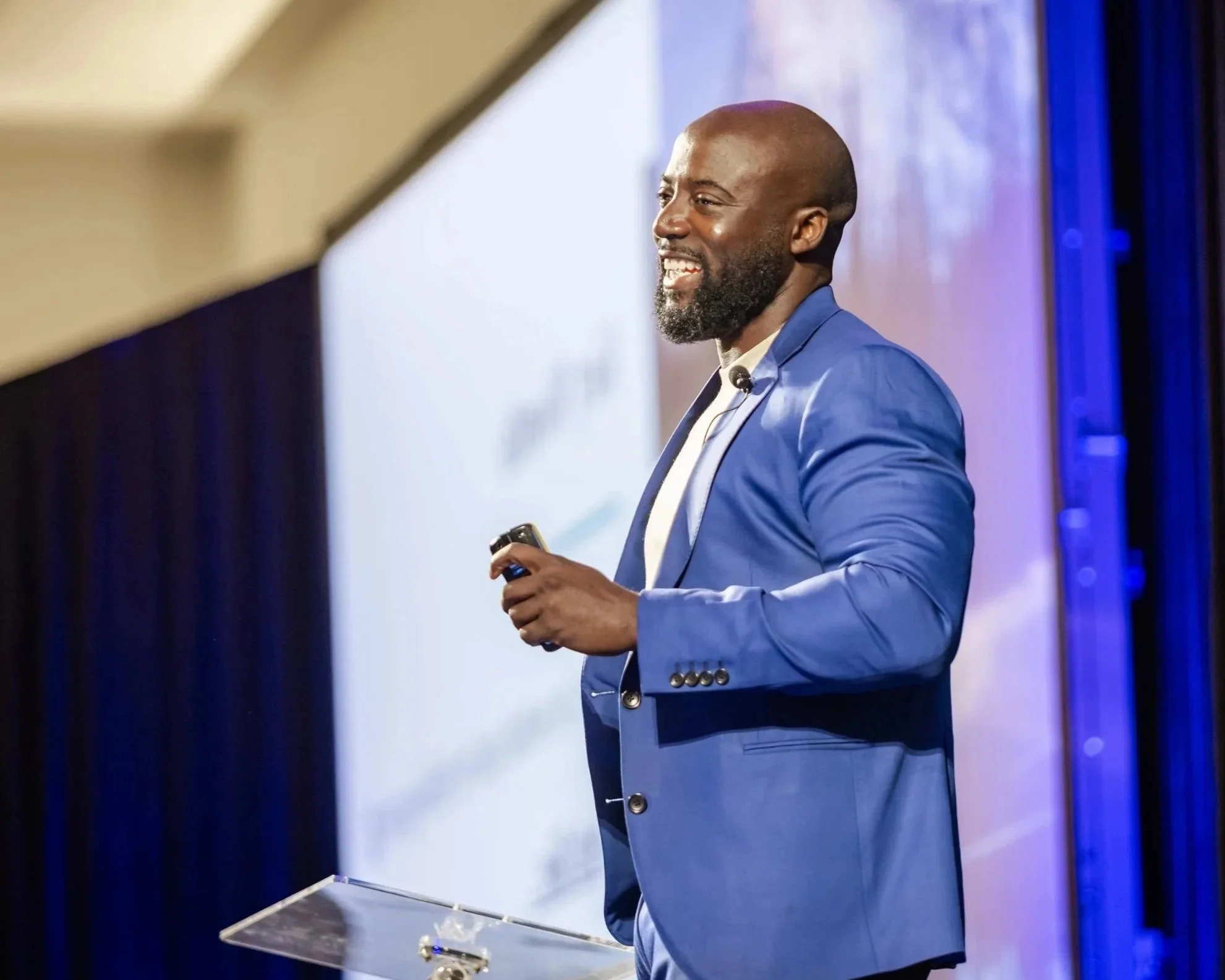
with Deans and Provosts himself, at a high level, as a regular part of his own working life. He's also a certified mediator who has personally facilitated and resolved hundreds of real disputes — not negotiation theory, but the actual practiced skill of getting two sides that don't trust each other to a resolution, which is exactly what an internal campus negotiation requires. He's not theorizing about how to navigate a university's internal power structure. He's doing it, currently, inside one of the institutions this program is built to serve — recognized for it three times over with alumni honors from his own university.
That's the combination NAEP was actually looking for, and it doesn't exist anywhere else. Not a negotiation expert who's never sat in a Provost's office. Not a higher-ed consultant who's never had to close a deal under pressure with a global brand on the line. You get a top-ten global negotiation expert who is also, right now, a working campus insider — backed by the infrastructure of the American Negotiation Institute, and endorsed by the leading association in educational procurement.
NAEP didn't get to be the leading association in this space by partnering with just any training vendor. It partnered with the one combination of expertise that matched the actual problem its members have. That's not a coincidence — that's the standard NAEP set for its members, and it's the reason this program exists in the first place.
over 2.5 million people trained. Over 55K Certified.
f








Your New Plan
What AcTually Changes
This program doesn't just teach negotiation tactics. It rebuilds how you're positioned on your own campus, mapped directly to the four things NAEP's own Competency Model says define great procurement leadership:
You increase performance — not by working harder, but by walking into every negotiation prepared instead of reactive, with a repeatable operating system instead of improvisation.
You build relationships — the actual competency NAEP names as "Negotiating": the ability to negotiate skillfully in tough situations, win concessions without damaging the relationship, and earn trust quickly, with both vendors and the people down the hall.
You drive results — through creativity and leverage-stacking that unlocks deals and internal wins that looked impossible under the old, positional-power approach.
You lead others — becoming the person who doesn't just process transactions, but leads change, builds coalitions, and earns a seat at the table before the decision gets made, not after.
This is the shift from transactional buyer to institutional negotiator. From "the department that says no" to the campus's partner of choice for problem-solving. From firefighter to architect.
Three tracks, One Transformation
Each tier includes:
✓ The same curriculum built specifically for higher ed procurement
✓ NAEP's subsidized member rate
✓ A CFO-ready justification letter template
THE FLAGSHIP
NAEP Negotiation & Procurement Leadership Academy
12-month cohort · Monthly expert training + monthly cohort huddle
This is the full transformation. A 12-month journey from skilled practitioner to recognized campus leader — negotiation mastery, relationship capital, and institutional influence, reinforced month over month with a small group that becomes your professional support system, not just your classmates.
A little-known truth about leverage: you don't need positional power to get it. Early on, you get the research-backed preparation tools that let you walk into any negotiation from strength, not desperation.
The negotiation nobody prepares you for — faculty and researchers who've already made informal commitments — gets real, dedicated attention, with a framework built to protect the relationship and the institution.
You don't just learn "influence without authority" as a phrase. You build the actual coalition-building skill that gets you into the room before the decision is made.
You set a leadership vision at the start of the program and measure your own growth against it by the end — so the transformation isn't just something you feel, it's something you can point to.
A full year of access to ANI's complete course library and Ask Kwame AI comes included — not an upsell, just part of what you get.
Ends with a capstone: a real campus initiative and a documented result you present to your cohort.
And you don't just walk away with a line on your resume. You earn an official, jointly issued NAEP × ANI Negotiation Leadership Certificate — the kind of credential that goes on LinkedIn, in your next performance review, and in the conversation about your next promotion.
Your full session calendar is confirmed as soon as you enroll, so you can plan around it from day one.
$4,500
A 12-month cohort. Monthly live expert training, monthly small-group huddles, a capstone project, and the ANI x NAEP Negotiation Leadership Certificate at the end. This is the full transformation, built in five phases — from negotiation fundamentals to leading campus-wide change without formal authority.
Full Transformation
THE Series
Strategic Procurement Leadership Series
Quarterly · Four focused topics · Expert training + cohort huddle each quarter
For the procurement leader who wants real, structured development without a 12-month commitment. Four of the flagship curriculum's highest-impact topics, delivered one at a time, each paired with a live cohort huddle where you work an actual negotiation you're facing right now.
Building leverage when you don't have positional power — the preparation framework most procurement professionals never got, the one that shows you leverage you didn't know you had before you ever sit down at the table.
Mastering the table — where "anchoring" and "hardball" stop being words you've heard and start being moves you can actually execute live, under pressure.
Strategic supplier partnerships — moving your key vendors from "we manage them" to genuine strategic partners who prioritize you when it matters, because you've become their customer of choice, not just another account.
Influence without authority — the thing every conversation we've had with NAEP members points to as the single biggest challenge: leading on campus without a mandate.
A full year of access to ANI's complete course library and Ask Kwame AI comes included here too — the same tool available in Track 3, built into your Series enrollment at no extra cost.
Your quarterly session dates are confirmed as soon as you enroll.
$2,400
Four quarters, four high-impact topics, each with a live session and a cohort huddle. Built for people who want expert-led development without a monthly commitment.
On-Demand
Negotiation Essentials + Ask Kwame AI
Self-paced courses · One-year platform access · AI-powered coaching
Built on the same methodology that has reached more than 2.5 million learners across platforms worldwide, with a 4.7-star average — now with its own dedicated home inside this program.
The accessible starting point — or the tool a procurement leader hands their whole team. Full access to ANI's core negotiation library, plus the Ask Kwame AI coach, which lets you practice real negotiation scenarios and get feedback on your own schedule, without needing a live practice partner or a training budget line item that has to clear three levels of approval.
If your institution is backfilling a position slower than you'd like and your team is already stretched thin, this is the one you can put in front of 20 people without asking anyone's calendar to cooperate.
This is a seat, not a shared login. Every person gets their own account, their own practice reps with Ask Kwame AI, and their own progress — whether it's one seat for you, or twenty for your whole team.
$650
A full year of self-paced course access, plus an AI coach that runs negotiation scenarios with you and gives feedback until the moves become instinct. No live sessions required.
After the EPIC keynote, the feedback wasn't "that was a nice talk." It was attendees specifically noting how customized the content felt — how it didn't sound like a generic negotiation session with "procurement" bolted onto the slides, but like someone who understood the actual job: the budget cycles, the internal politics, the reality of trying to lead a team that's doing more with less while the ground keeps shifting underneath higher ed as a whole. That reaction is the reason NAEP didn't just say thank you and move on — it's the reason this program exists.
If you're wondering whether your institution's budget office will sign off — every track comes with a CFO-ready justification letter template, built specifically to help you make the case internally. You won't be figuring that conversation out alone either.
Why Now?
The Flagship and the Series both kick off in October, once fall semester settles and cohorts are locked in. Enrollment, though, is open right now — and that gap between securing your seat and the program actually starting is the whole point.
The cohort model is powerful, but it's not infinite — there's a real logistical ceiling on how many people can move through the Flagship track and the Series together at once, so seats fill on a first come, first served basis well before October arrives.
Budgets have just reset. The next few weeks, before the fall semester fully takes over your calendar, is the window you actually have to think about your own development — not because we're saying so, but because you already know that's when your bandwidth opens up every year. Enroll now, while that budget conversation is fresh, and by the time October starts, your seat and your cohort are already set.
This program exists because two organizations that don't lend their name to just anything decided to put it behind the same thing. NAEP built its reputation over a hundred years by knowing exactly what its members need and refusing to settle for less. ANI built its reputation training the negotiators inside Google, Apple, and NASA, and teaching the discipline at one of the top law schools in the country. Neither one of us does this casually — which is exactly why you can trust what's built here.
But the reason I do this work isn't the résumé. It's this: in nearly every negotiation conversation I've ever had, the person struggling wasn't missing intelligence or effort. They were missing the recognition that negotiation isn't just something you do across a table with a vendor — it's how you lead. It's how you lead your team, and it's how you lead a campus that will never hand you formal authority over it. That's the shift this program is built to make. Not another tactic. A different way of seeing your own job.
— Kwame Christian, Esq., M.A. Founder & CEO, American Negotiation Institute
P.S. This isn't a repackaged corporate negotiation course with a higher ed label stuck on it. NAEP negotiated this partnership specifically so its members could get access to training normally reserved for organizations like Google, Apple, and NASA — at a rate built for a non-profit membership association, not a Fortune 500 training budget. Whichever track fits your calendar and your budget, seats are limited and this window won't stay open indefinitely.
Your Questions, Answered
-
Every tier runs a full year, and draws from the same training Kwame has delivered to procurement teams at Ohio State University, OshKosh, Target, the U.S. Army Defense Acquisition University, Great River Energy, and more.
-
You're welcome to switch tiers once your current 12-month term wraps up. Flagship Academy and the Strategic Leadership Series are built around a cohort moving through the material together, so to protect the experience for everyone, all tiers stay fixed for the full year, regardless of tier.
-
New content gets added as it's developed, not on a set release calendar. You'll get access to new material the moment it's ready, without waiting for a scheduled update. Your access covers the full library for the length of your enrollment, so as new material goes live, you get it at no extra cost. And if there's a specific topic or challenge you'd like to see covered, tell us — there's a real chance it becomes the subject of the next course we build.
-
That's the reason there are three tiers. If you or your institution's budget is tight this year, the $650 self-paced option gets you the same core frameworks. If your department wants to roll it out to an entire team, that tier scales the most cost-effectively. The $2,400 and $4,500 tiers are there when you're ready for live cohort work and a certificate.
-
This didn't start as a marketing plan. It started as a single closing keynote at NAEP's EPIC conference. The response from attendees was strong enough that NAEP's own leadership came back afterward and said they wanted more than a keynote, they wanted this built into something ongoing for their members. That's the reason this program exists. NAEP doesn't put its name behind a partnership lightly, and the fact that this grew directly out of member demand, not a cold sales pitch, is exactly why you can trust it was built for you rather than built to be sold to you.
-
Think of the three tracks as three different altitudes of the same skill. On-Demand is where you sharpen the fundamentals — becoming a better negotiator, someone who gets better deals and communicates with more confidence in the moment. That's tactical, and it's the foundation everything else builds on. The Series takes you a level up, blending that same negotiation skill with real leadership development, so you're not just negotiating better, you're starting to lead differently. The Flagship is built for a different goal entirely: becoming the strategic leader your campus already needs — the person seen as a go-to partner at the top level of institutional leadership, with skills that transfer well beyond procurement. If you're aiming to be a sharper negotiator, start with On-Demand. If you're aiming to grow as a leader while you build that skill, the Series is your track. If you're aiming to become, or already are, the kind of leader other people go to first, the Flagship is where that gets built on purpose. And if you're still not sure, book a call with our team here and we'll help you figure it out within 15 minutes.
-
Yes — and for a lot of procurement leaders, this is actually the smartest way to buy in. Put your director-level or highest-potential people in the Flagship, give your broader team On-Demand access to the course library and Ask Kwame AI, and everyone on your team is building the same core skill at the depth that fits their role and your budget. There's no rule that says everyone on a team has to be on the same track.
-
Every track comes with a CFO-ready justification letter template, so you're not building that case from scratch. But honestly, once you run the numbers, this is one of the easier financial decisions your office will make this year. Procurement spend typically runs about a quarter of a university's total operating budget. For a smaller institution managing somewhere in the $10–20 million range in annual procurement spend, even a conservative half-percent improvement in negotiated outcomes is worth $50,000 to $100,000 a year. For a large research university managing spend in the billions — NAEP's own members have described managing north of $2 billion annually — that same half-percent improvement is worth more than $10 million, and a more ambitious 5% improvement, the kind real negotiation and leadership training is designed to produce, is worth well over $100 million. Against price points of $650, $2,400, or $4,500, the math isn't close. This program doesn't cost your office money. Getting better at negotiation gives your office more money to spend on everything else that matters.
-
Look at it two ways. For your institution: even a small percentage improvement in negotiated contract terms, avoided maverick purchases, or a vendor relationship that shifts from transactional to strategic is worth multiples of any of these three price points against real procurement spend — that's the same math your CFO will do, which is why every track comes with a justification letter template in the first place. For you personally: this isn't just a training expense. It's the thing that turns you into the person your CFO or VP actively seeks out before a decision gets made, instead of after. The Flagship's official NAEP × ANI Certificate exists specifically because that shift is supposed to show up in your next performance review, not just in how you feel.
-
Tier 1 asks for a monthly commitment over 12 months. Tier 2 asks for four sessions across a year. Tier 3 asks for nothing but your own pace. Pick the one that matches the season you're in right now.
-
This is the question we hear most, and it's a fair one. Here's the honest answer: NAEP wouldn't have put its name on this if it didn't hold up. Procurement professionals serve as active consultants on the curriculum, and Kwame personally negotiates with Deans and Provosts as part of his own role at a university, not as a consultant theorizing from the outside. On top of that, ANI's work isn't limited to higher ed — Kwame has already trained procurement teams at Ohio State University, OshKosh, Target, US Army Defense Acquisition University, Great River Energy, and more, which means this isn't generic negotiation training with a higher-ed label stuck on it. It's deep, specific expertise in procurement negotiation itself, paired with firsthand experience navigating campus politics. Between NAEP validating the fit before this ever launched, and that combination of procurement-specific and campus-specific expertise, this is two organizations who each checked the other's work before putting their name on it. And the 2025 NAEP keynote feedback was explicit: attendees said it felt built for their profession, not repurposed for it.
-
This program is built for exactly that stage. The influence-without-authority skills, the executive presence training, the coalition-building tools — these are what get you noticed for the leadership role you don't have yet.
-
Your 12-month term begins on the program's official kickoff date, not the day you enroll. This is true across all three tiers, including On-Demand Essentials. Enrolling early secures your seat and locks in your rate. The clock itself starts at kickoff, currently set for October. For the Flagship and the Series, your specific session dates and times will be confirmed and sent to you well ahead of launch — so you'll have real notice to plan around, not a schedule dropped on you at the last minute.
-
Anything related to actually delivering the program — content, scheduling, your cohort, your login, your certificate — goes straight to the ANI team, and you'll be working with real people, not a general inbox. Anything about your NAEP membership itself, or how this fits with other NAEP programming, goes to NAEP staff. Between the two organizations, every question has a clear home, and nothing falls into a gap where neither side picks it up.
-
This program is built for people with real jobs and real calendars, not for people who happen to have ample freetime. We don't expect perfect attendance, and the format is built around that reality — a blended mix of live sessions and recorded access, so the material fits into your schedule instead of demanding you rearrange your life around it. Every live session is recorded, so if something comes up, you'll still have full replay access. Busy is normal here. We built for it.
-
Cohorts are grouped for a mix of institution type, seniority level, and geographic region, so you're learning alongside peers who understand your world. But here's the deeper reason this matters: the research on peer and mastermind-style learning groups is consistent and not particularly close — participants in structured peer groups report real gains in leadership growth, accountability, and professional confidence that individual study alone doesn't produce. There's a reason the most accomplished people you know rarely operate alone. Elite performers connect with, learn from, and solve problems alongside other elite performers, and that's not an accident, it's a competitive advantage they built on purpose. A course can teach you a framework. It can't replicate the experience of working through your hardest, most specific problem with a small group of other procurement leaders facing something similar, who can push back on your thinking in real time. That's what you're actually buying in the cohort model, and it's the part no on-demand library, including ours, can substitute for.
-
The NAEP × ANI Negotiation Leadership Certificate is a different tier of credential entirely: it's the official, jointly issued credential earned specifically by completing the full 12-month Flagship program and capstone. It's not a participation marker, it's a status signal — the kind of credential that goes on your LinkedIn, in your resume, and in the conversation about your next promotion, because it represents something a much smaller number of people will ever actually complete.
-
Keep an eye on NAEP's own website and webinar calendar. NAEP is actively promoting this program through their own channels, including live sessions built around this partnership. This isn't a static offer sitting on a page — it's an active, ongoing rollout NAEP is putting real weight behind.
-
That's completely fair — a decision like this doesn't have to happen alone on a webpage. Book a call with our team here and ask the specific questions actually on your mind. No pressure, no script, just a real conversation to help you figure out the right track.